


If you're considering how to add ac to existing furnace systems, you're not alone. Many homeowners with forced-air heating can leverage their existing ductwork and blower for a complete climate control solution. Integrating central air conditioning with your current furnace is often straightforward, cost-effective, and can transform your summer comfort while boosting your home's value.
Yes, you can add AC to an existing furnace. Here's what you need to know:
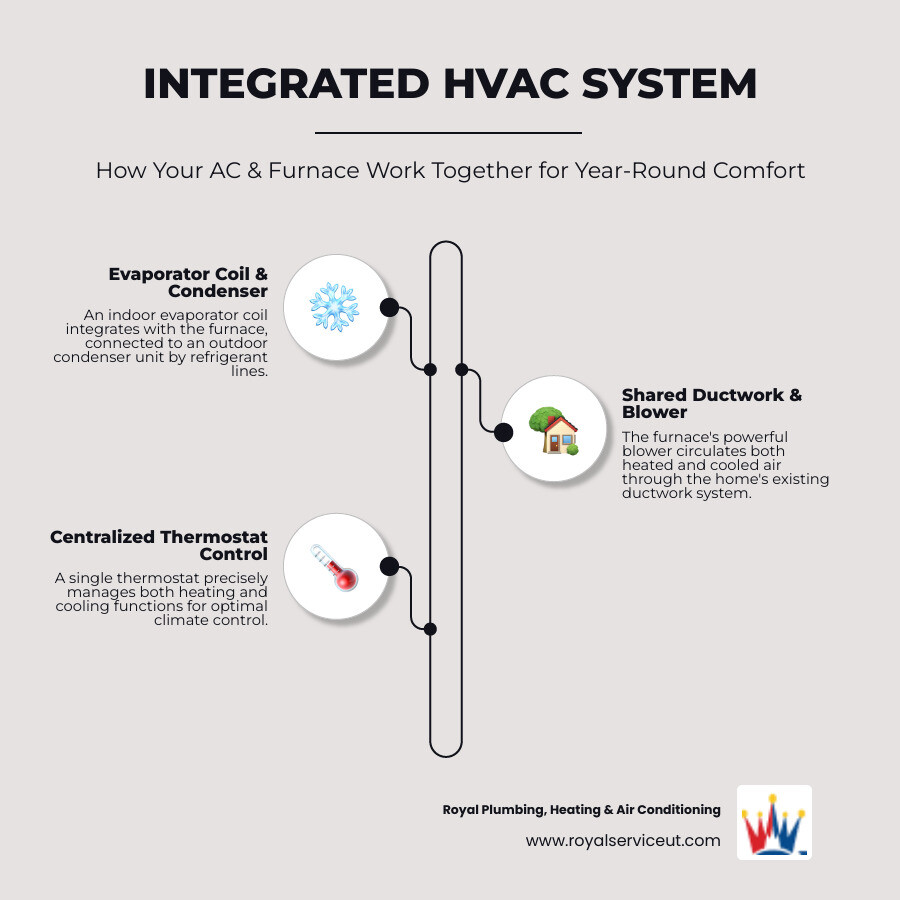
When summer heat hits Northern Utah, homes with only forced-air heating can become uncomfortably warm. Many homeowners assume they need a separate cooling system, but the reality is simpler. Your furnace already has the ductwork, vents, and a blower fan that an AC system needs to distribute cool air. By adding an outdoor condenser and an indoor evaporator coil, you can create an integrated HVAC system for year-round comfort.
However, the process requires careful consideration. Your furnace's age, condition, and blower capacity are crucial. Your ductwork, insulation, and electrical capacity must also be assessed to ensure the integration works efficiently. While a DIY project is tempting, the complexity of refrigerant handling, electrical work, and system balancing makes professional installation the safer, smarter choice.
At Royal Plumbing, Heating & Air Conditioning, we've helped countless Northern Utah families transform their heating-only homes into complete climate control systems that work efficiently in every season when they add ac to existing furnace systems.
Before you add ac to existing furnace systems, it's crucial to ensure your home is ready. Success depends on your existing infrastructure. Your furnace, ductwork, electrical capacity, and insulation must be able to support a new cooling system.
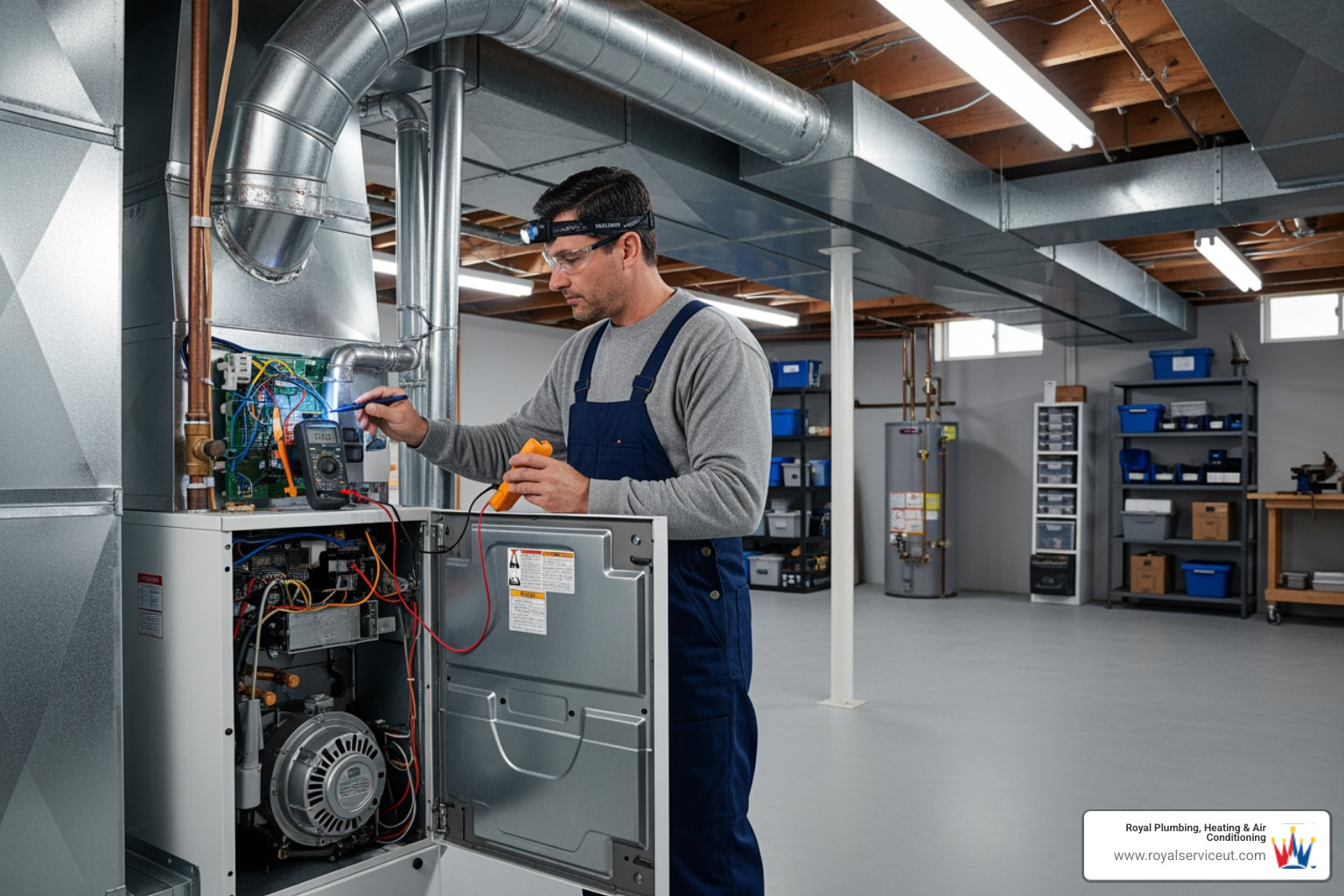
When you add ac to existing furnace systems, your furnace's blower motor is essential for circulating cool air. It doesn't sit idle in the summer; it powers your cooling comfort. Therefore, the blower must be in good condition and powerful enough for the job.
Furnace age is a key factor. A furnace can last 15-20 years, but an older unit may not be compatible with a new AC. If your furnace requires frequent repairs or performs poorly, consider upgrading it before adding air conditioning. This avoids investing in a new AC only to have the furnace fail soon after.
Your blower motor capacity is critical. It must have enough power for the higher airflow cooling requires compared to heating. An undersized or old blower will struggle, resulting in weak airflow, inconsistent temperatures, and uncomfortable rooms.
Your home's electrical system capacity also comes into play. Adding an air conditioner means adding electrical load, and older homes weren't always wired with modern HVAC systems in mind. A professional assessment ensures your electrical panel and wiring can safely handle the additional power requirements without tripping breakers or creating safety hazards.
Properly sealed and sized ductwork is essential. If not, much of the cool air from your new AC will leak out before reaching your rooms. Your existing ducts will deliver the cool air, but only if they are in good condition.
A ductwork inspection can reveal hidden problems like gaps, holes, or separated sections that let cool air escape into attics and crawl spaces. Sealing leaks is crucial for efficiency; leaky ducts can waste 20-30% of conditioned air, leading to higher energy bills and less comfort.
Duct size is also important. Older ducts designed only for heating may be too small for modern AC airflow demands. Undersized ducts force your system to work harder, causing noise and weak airflow. Duct modifications might be needed for proper air distribution.
Insulation is the unsung hero of home comfort. Many older Northern Utah homes lack sufficient insulation by today's standards. The R-Value (insulation) measures heat resistance, and without adequate insulation, your new AC will run constantly as cool air escapes and hot air seeps in.
Older homes require special attention, often having uninsulated ducts, poor wall insulation, and air gaps. Addressing these issues before adding AC is key for efficiency. Upgrading attic insulation alone can significantly improve your new AC's performance, ensuring it keeps your home comfortable without struggling.
Most of these issues are fixable. Identifying them early with a professional assessment ensures they are addressed properly before installation. This gives you a clear plan for supporting an efficient and effective AC system for years to come.
When you add ac to existing furnace, you are integrating new components with your existing system to create complete climate control. Each part has a vital role, and together they transform your home's comfort.
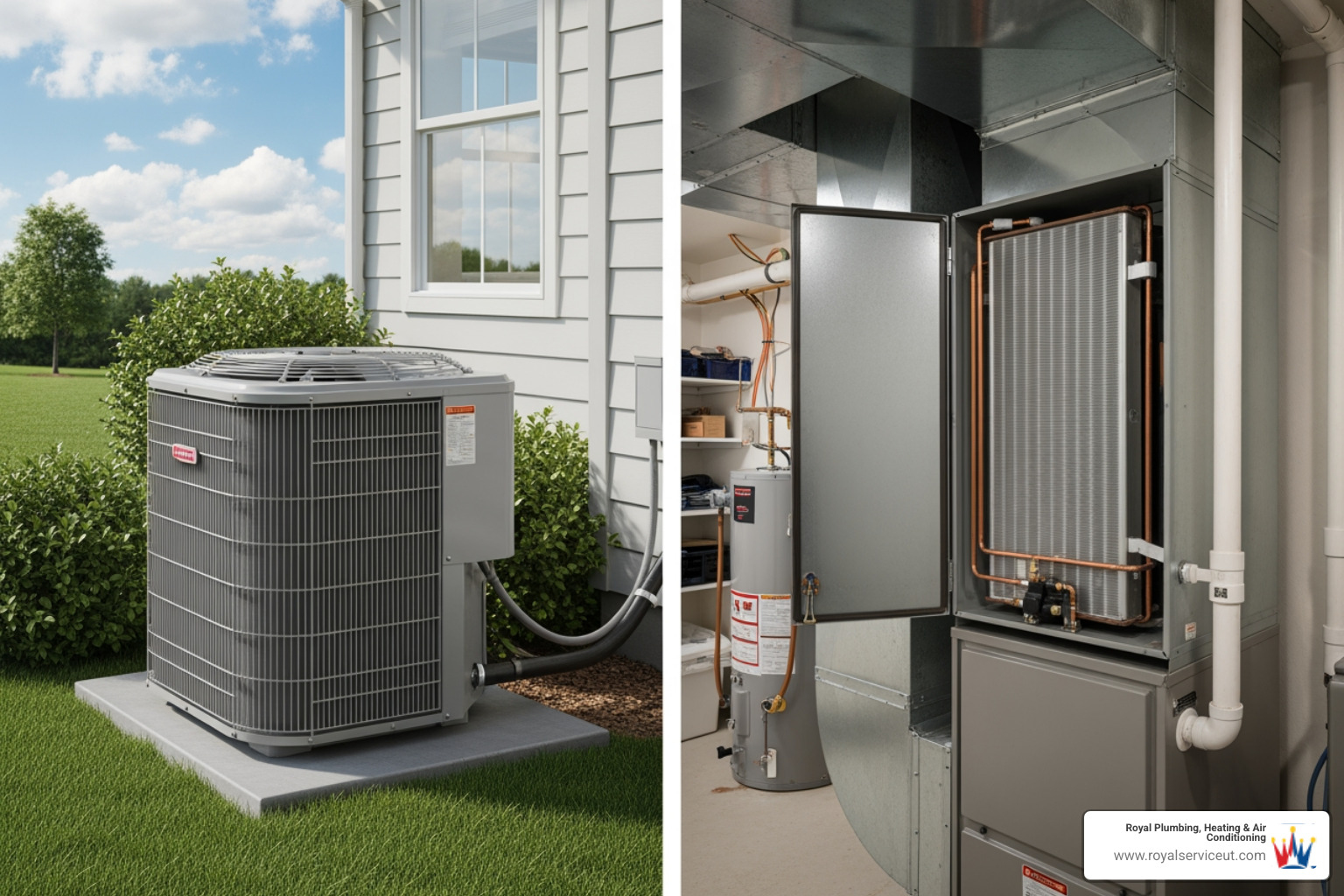
To introduce cool air into your existing furnace system, several key components are installed that work with your furnace's blower and ductwork.
The Evaporator A-coil is the hero of indoor cooling. It's installed inside or near your furnace's plenum. As warm, humid air passes over the cold coils, it absorbs heat and moisture. The result is cool, dry air circulated by your furnace's fan.
The Outdoor Condenser Unit is the large box outside your home. It houses the compressor, condenser coil, and a fan. The compressor circulates refrigerant to move heat from inside to outside, where the coil releases it. Proper placement is key for quiet, efficient operation.
Refrigerant Lines are insulated copper tubes connecting the indoor and outdoor units. They transport the refrigerant that moves heat. These lines must be correctly sized and insulated to prevent energy loss. Handling refrigerant requires professional certification, making this a job for the pros.
The evaporator coil removes humidity, creating condensation (water). The Condensate Drain line safely carries this water away from your furnace and out of your home. Proper installation with a slight slope is essential to prevent water damage and mold. A condensate pump may be needed if gravity drainage isn't possible.
An Upgraded Thermostat is usually necessary to control both heating and cooling. Modern smart thermostats are excellent for managing both functions, offering convenient control, learning your preferences, and integrating with smart home systems to save energy. This ensures seamless thermostat integration and year-round comfort.
When you decide to add ac to existing furnace, you have a couple of excellent options for your new cooling system.
| Feature | Central AC Integration | Heat Pump (Dual Fuel) Integration |
|---|---|---|
| Primary Function | Provides cooling only | Provides both cooling and efficient heating |
| Heating Source | Relies solely on existing furnace for heat | Heat pump provides primary heat; furnace acts as backup |
| Energy Efficiency | Good for cooling, depends on SEER rating | Very high for cooling and moderate heating, depends on SEER |
| Winter Operation | Furnace handles all heating | Heat pump heats down to a certain temperature (e.g., 30°F), then furnace takes over |
| Cost-Effectiveness | Lower initial cost for cooling | Higher initial cost, but can offer significant heating savings in moderate weather |
| Fuel Source | Uses electricity for cooling; furnace uses natural gas or electricity for heat | Uses electricity for heating/cooling; furnace uses natural gas for backup heat |
| Northern Utah Benefit | Excellent for hot summers | Ideal for Northern Utah's varied climate, leveraging affordable natural gas for extreme cold |
A Central Air Conditioner is the most common choice if your main goal is adding cooling. Your furnace's blower pushes warm air over the new evaporator coil, and cool air is circulated throughout your home. Your furnace remains your dedicated heating system. This option focuses on efficient cooling by leveraging existing furnace components.
A more versatile option is a Heat Pump, creating a "dual fuel" system with your gas furnace. A heat pump cools in the summer and provides efficient heating in milder winter weather. In Northern Utah, it typically handles heating above 30-40°F. When it gets colder, your gas furnace takes over, providing powerful supplemental heat. This dual fuel system offers the best of both worlds: efficient electric heating and cooling, plus affordable natural gas warmth when needed, maximizing energy efficiency and year-round comfort.
We understand that choosing between these options can feel like a big decision. Our team is here to help you weigh the energy efficiency benefits and specific needs of your Northern Utah home to find the perfect integrated solution.
Deciding to add ac to existing furnace is exciting, but crucial factors will determine your long-term comfort and costs. Getting these details right from the start ensures years of reliable, efficient cooling without future headaches.

Sizing your AC isn't a guess based on square footage. It's a precise science, and getting it wrong—either too big or too small—causes significant problems.
An undersized AC unit will run constantly without ever reaching a comfortable temperature. This wastes energy, increases utility bills, and causes excessive wear, leading to more repairs and a shorter lifespan.
An oversized unit is also problematic. It cools the space too quickly and shuts off before completing a full cycle. This "short cycling" is inefficient and prevents the unit from properly dehumidifying the air, leaving you feeling cool but clammy. The constant starting and stopping also wastes energy and wears out components faster.
This is where a Manual J load calculation is essential. This detailed assessment considers factors like square footage, insulation, windows, and occupancy to determine your home's exact cooling needs. This ensures your new system is perfectly matched to your home for optimal comfort and efficiency.
You should also understand SEER (Seasonal Energy Efficiency Rating). Like MPG for a car, SEER measures cooling efficiency. Higher SEER ratings mean greater efficiency and lower utility bills, with modern systems saving 20-40% over older units. While high-SEER models have a higher initial cost, they provide long-term savings, which is significant during Northern Utah's hot summers.
Proper sizing also directly impacts humidity control. An appropriately sized unit runs long enough to pull moisture from the air, leaving you feeling cool and comfortable rather than cool and sticky. This is especially important in areas where summer humidity can make the heat feel even more oppressive.
While DIY projects can be satisfying, integrating an AC with your furnace is a job for professionals. It's essential for your safety, system performance, and peace of mind.
Project complexity is high. You're integrating two major systems that require deep knowledge of HVAC principles, refrigeration, airflow, and electrical work. A single mistake can cause inefficiency, safety hazards, or system failure.
Refrigerant handling safety is a major concern. Refrigerant is a hazardous chemical requiring EPA certification to handle, making DIY illegal and dangerous. Improper handling can cause personal injury, environmental damage, and system failure. Professionals are trained, certified, and equipped to manage refrigerants safely and legally.
The required electrical work is also critical. A new AC needs a dedicated circuit with correct wiring and breakers. Mistakes can create a fire hazard. Your electrical panel must have sufficient capacity, and all work must meet local codes. Licensed technicians ensure all connections are safe and correct.
System performance optimization requires professional expertise. After installation, the system must be precisely charged with refrigerant, and airflow must be balanced. Professionals also test for leaks, proper drainage, and correct operation. These crucial steps ensure efficiency and longevity.
Warranty protection is another key reason. Most manufacturers require professional installation to validate their warranties. A DIY job could void your warranty, leaving you responsible for costly repairs. The initial savings aren't worth the long-term risk.
Your ductwork needs a professional eye. Existing ducts must be assessed, sealed, and possibly modified for cooling. Professionals use specialized tools to test airflow, find leaks, and ensure proper air distribution, spotting issues an untrained eye would miss.
At Royal Plumbing, Heating & Air Conditioning, our licensed and insured technicians bring expertise to every installation when you add ac to existing furnace. We know Northern Utah's climate and building codes, ensuring every job from Brigham City to Bountiful meets the highest safety and performance standards. You'll have peace of mind with a correctly installed, efficient system backed by our commitment to your comfort.
The decision to add ac to existing furnace is a long-term investment in your comfort, health, and home value. It transforms your house into a cool sanctuary, no matter the weather.

When you add ac to existing furnace, you get more than just an initial blast of cool air on a hot day. The benefits extend to year-round comfort and improved air quality.
An integrated system provides whole-home cooling with consistent temperatures, eliminating hot and cold spots. Your furnace's fan works with the AC to constantly circulate and filter the air. This leads to improved air filtration, capturing dust, dander, and other airborne particles.
This constant filtration provides significant allergen reduction, creating a healthier home. AC systems are also excellent at humidity management, pulling excess moisture from the air. This makes your home feel cooler and helps prevent mold, mildew, and that sticky, muggy feeling.
Adding a modern AC unit when you add ac to existing furnace isn't just about feeling good; it's also a smart financial move. It can significantly boost your home's long-term value and help keep those utility bills in check.
Modern, high-efficiency AC units with high SEER ratings are much more efficient than older models, leading to lower utility bills—often saving 20-40% on cooling costs. Integrating a smart thermostat improves these benefits by learning your habits and optimizing energy use. Some even allow for zoning to cool only the rooms you're using, further maximizing savings.
Central air conditioning also increases your home's appeal and increased market value, a significant advantage in Northern Utah's real estate market. Homes with central AC are more attractive to buyers, sell for more, and often sell faster. It signals that a home is modern, comfortable, and well-equipped.
Can you add ac to existing furnace systems? Absolutely. It's a smart, practical way to upgrade your home's comfort without the cost and hassle of a full system replacement.
This guide covered the essential steps: assessing your furnace, blower, and ductwork; understanding the new components; and the critical importance of proper sizing with a Manual J calculation. We also explored the choice between a central AC and a dual-fuel heat pump, emphasizing that professional installation is essential for safety, efficiency, and peace of mind.
The benefits go beyond just staying cool. You're investing in year-round comfort, cleaner air, lower energy bills, and increased home value. It's an investment that pays dividends in both daily comfort and future resale value.
At Royal Plumbing, Heating & Air Conditioning, we help homeowners across Northern Utah, from Cache to Salt Lake County, transform their homes with expertly integrated AC systems. Our technicians understand our region's climate challenges and are committed to delivering lasting "royal comfort."
We focus on building relationships and providing personalized attention. From the initial assessment to the final walkthrough, we're with you every step of the way.
Ready to stop sweating through another Northern Utah summer? Let's make your home the cool, comfortable retreat you deserve. Contact us for your AC installation today, and let's get started on bringing refreshing, reliable comfort to your home!
Find answers to frequently asked questions about our services.
By reading this blog post, you will gain valuable insights and knowledge that can help you in your daily life.
The purpose of this blog post is to inform and educate readers about a specific topic, providing them with useful information and tips.
The target audience for this blog post includes individuals who are interested in learning more about the topic and seeking practical advice.
You can apply the knowledge and tips shared in this blog post to your own life by implementing them in your daily routine.
The benefits of reading this blog post include gaining new perspectives, acquiring practical skills, and enhancing your overall knowledge on the topic.
Absolutely! Feel free to share this blog post with your friends, family, or anyone who might find it helpful or interesting.
Yes, the information provided in this blog post is reliable and based on credible sources. We strive to ensure the accuracy and quality of the content we share.
The benefits of reading this blog post include gaining new perspectives, acquiring practical skills, and enhancing your overall knowledge on the topic.
If you have more questions related to the blog post topic, please don't hesitate to contact our team. We're here to help!
We value your feedback! If you have any suggestions, comments, or feedback regarding this blog post, please let us know. Your input is important to us.
Trust our team of dedicated professionals for all your HVAC and plumbing needs.
