

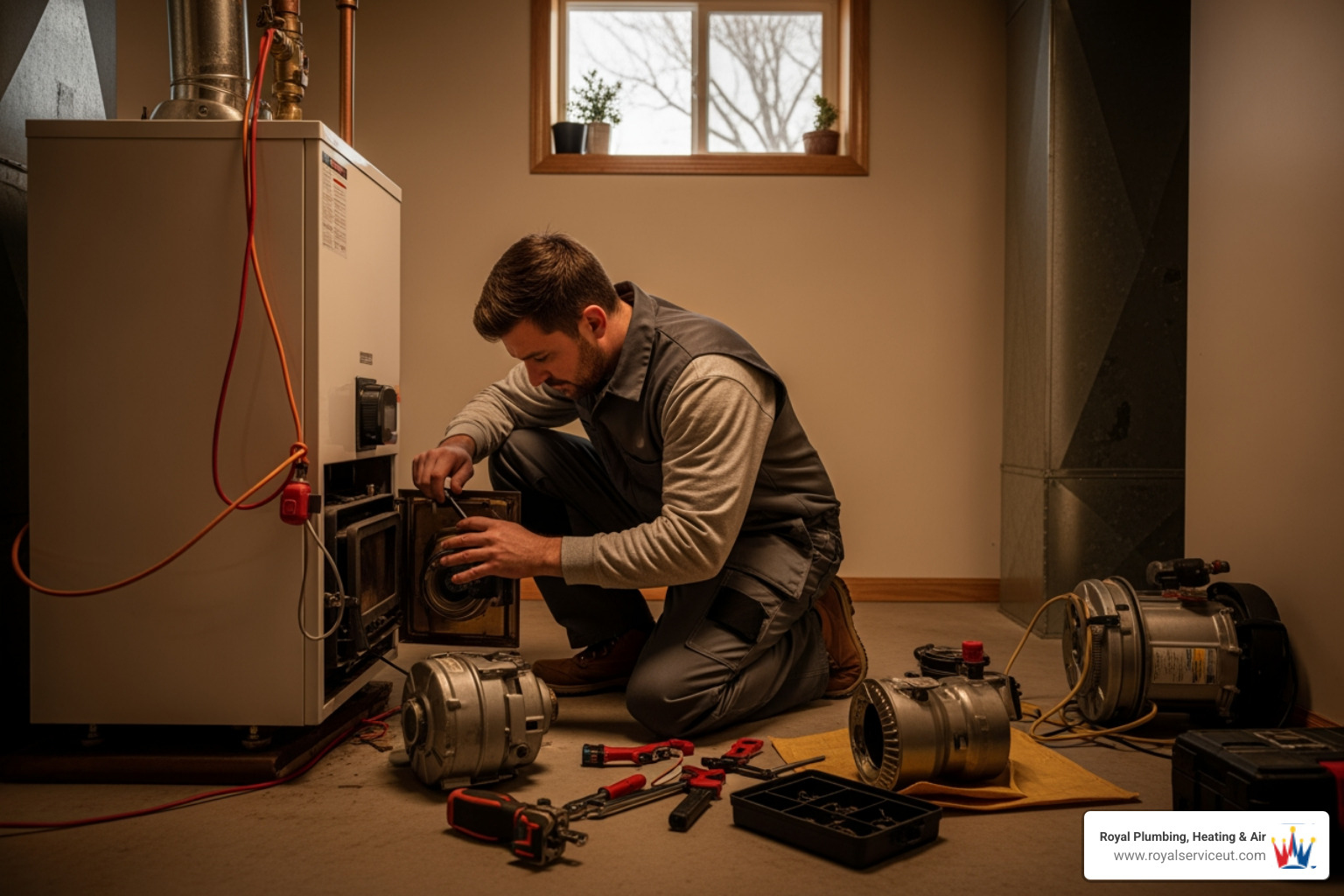
Boiler maintenance emergency in Layton, UT situations demand quick action, especially during Utah's harsh winter months when temperatures can drop below freezing and put your home at risk. When your boiler fails, you're not just facing an uncomfortable cold house - you're dealing with potential carbon monoxide leaks, frozen pipes, and significant water damage. Layton homeowners need to recognize the warning signs early and know exactly what steps to take before a minor issue becomes a dangerous crisis.
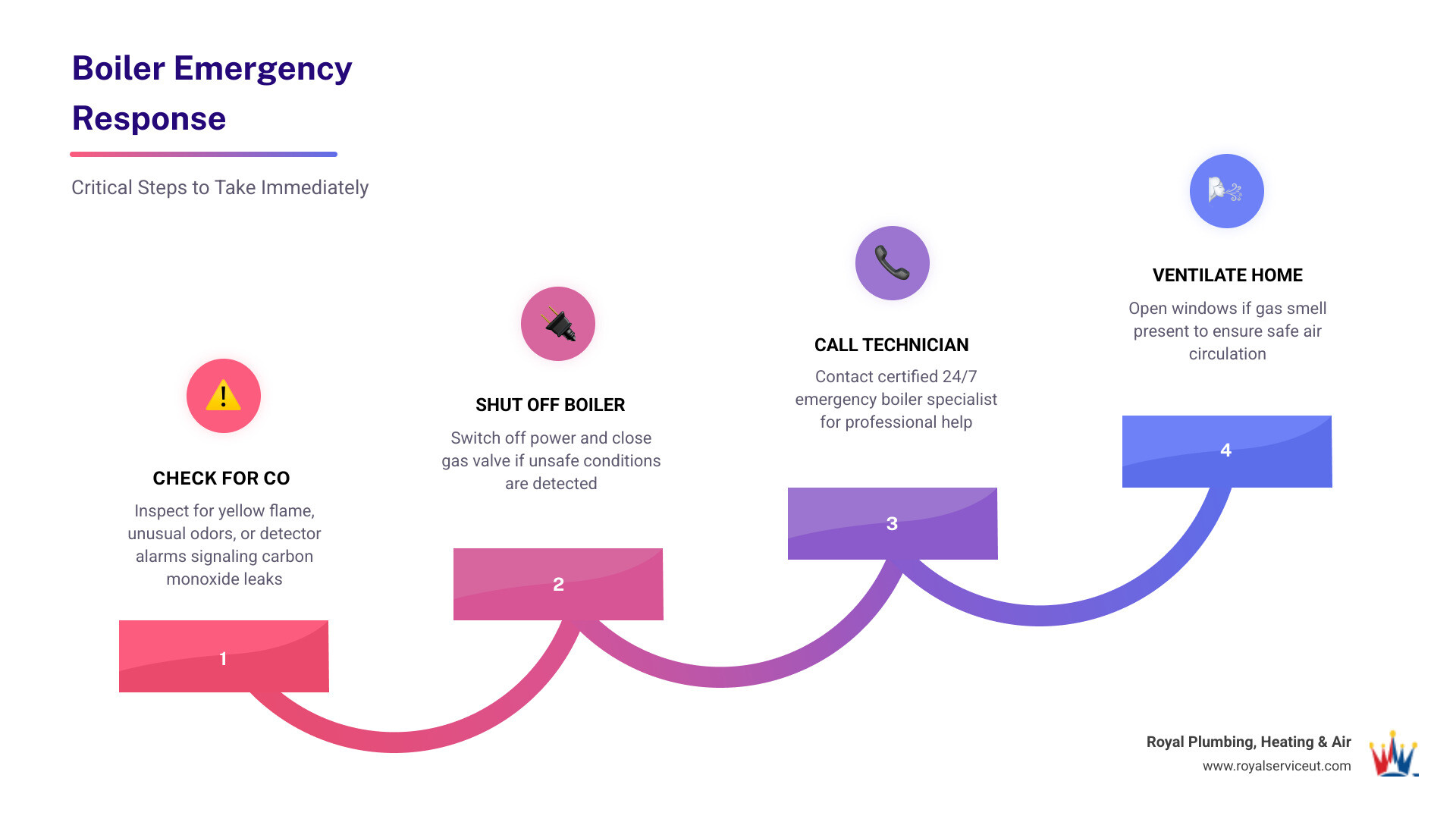
If you're experiencing a heating emergency right now:
For comprehensive heating solutions and preventive care, visit our heating service page, or contact our emergency team for immediate assistance.
Common boiler emergencies in Layton include tapping or kettling noises from limescale buildup, high system pressure readings, cold radiators while others stay hot, and complete loss of heat or hot water. Northern Utah's hard water accelerates sediment accumulation, which can cause your boiler to work harder and fail sooner. Well-maintained cast-iron boilers typically last 20-30 years, while high-efficiency condensing models run reliably for 15-20 years with annual servicing.
The best time to schedule preventive maintenance is in late summer or early fall, before the heating season begins. This timing helps you avoid mid-winter breakdowns when emergency calls spike and temperatures plummet. Regular tune-ups catch small issues before they escalate, improve energy efficiency, and extend your system's lifespan.
At Royal Plumbing, Heating & Air, we understand how critical it is for Layton families to understand boiler maintenance emergency in Layton, UT protocols - especially during Davis County's freeze cycles when delayed repairs can lead to burst pipes and significant damage. Our team is dedicated to serving homeowners with fast response times that make all the difference in protecting both comfort and safety.
Boiler maintenance emergency in layton, ut glossary:
Identifying a boiler maintenance emergency in Layton, UT before it leaves you shivering in the dark is half the battle. Boilers are generally quiet, reliable workhorses, but they have a specific "language" they use when they are about to fail. If you start hearing tapping noises—often compared to a small hammer hitting a pipe—it’s usually a sign of "kettling." This happens when lime scale or sediment builds up on the heat exchanger, restricting water flow and causing the water to steam and bubble, much like a tea kettle.
Another major red flag is the color of your pilot light. A healthy boiler should always have a crisp, blue flame. If you peek through the sight glass and see a yellow or orange flame, it’s a sign of incomplete combustion. This is a primary indicator that your system could be producing carbon monoxide, a colorless and odorless gas that is life-threatening.
Monitoring your system's water pressure is also vital. Most residential boilers operate safely between 12 and 15 psi (pounds per square inch). If you notice the gauge climbing toward 30 psi, the pressure relief valve may trigger, or worse, a pipe could burst. Understanding the signs of boiler repair vs replacement can help you decide if a quick fix will suffice or if your Layton home needs a modern upgrade.
Beyond the mechanical sounds, your nose and eyes are your best diagnostic tools. If you smell something akin to rotten eggs, you likely have a gas leak. If you notice a metallic or burning plastic smell, internal electrical components or wires may be overheating.
Rapid cycling—where the boiler turns on and off every few minutes—is another emergency signal. This puts immense strain on the motor and gas valve, often leading to a total system lockout right when you need heat the most. By handling common boiler repair issues early, we can prevent these cycles from burning out your expensive components.
Layton residents know that our water is "hard," meaning it’s packed with minerals like calcium and magnesium. While great for some things, it’s a nightmare for boilers. Over time, these minerals settle at the bottom of the tank or inside the copper heat exchanger.
This sediment accumulation acts as an insulator, meaning the boiler has to run longer and hotter to get the same amount of heat into your home. This leads to the "kettling" noises mentioned earlier and significantly reduces the unit's efficiency. Regular flushing and boiler maintenance for ongoing reliability are the only ways to combat the aggressive mineral content found in Northern Utah's water supply.
When the heat goes out at 2 AM in January, it’s easy to panic. However, staying calm and following a checklist can save your home from further damage. First, check your gas shut-off valve. If you suspect a leak, turn the handle so it is perpendicular to the pipe.
Next, verify the power switch. Believe it or not, many "emergencies" are caused by a family member accidentally flipping the boiler’s power switch, which often looks exactly like a standard light switch located near the unit. Check your circuit breaker panel as well to ensure a surge hasn't tripped the heating circuit.
Don't forget the thermostat. Sometimes a simple battery change is all that stands between you and a warm home. If these quick checks don't solve the problem, you are likely facing a true emergency boiler repair situation that requires professional tools and diagnostic equipment.
Your safety is our priority. If you suspect a carbon monoxide leak or a gas leak, evacuate the home immediately. Once everyone—including pets—is safe, call for professional help. If it is safe to remain in the house but the boiler is acting up, open a few windows to provide fresh air ventilation.
Protecting your property is the next step. If your boiler is leaking water, place buckets under the drips and move any electronics or valuables away from the area. A small leak can quickly turn into a flood if the pressure vessel fails completely. Our comprehensive boiler service guide outlines exactly how we diagnose these high-pressure situations to keep your Layton property dry and safe.
In Davis County, we experience rapid freeze-thaw cycles. When a boiler stops circulating warm water through your home’s pipes, the water inside those pipes can freeze in a matter of hours if the outdoor temperature is low enough. As water freezes, it expands, which can crack copper pipes or damage radiant floor loops embedded in your concrete.
If your expansion tank fails, the system has nowhere to send the naturally expanding hot water, leading to a dangerous spike in pressure. By following boiler-maintenance-best-layton-ut-tips, you can ensure your expansion tank and pressure relief valves are tested and ready to handle the stress of a Utah winter.
The best way to handle a boiler maintenance emergency in Layton, UT is to prevent it from ever happening. We recommend annual tune-ups scheduled for the late summer or early fall. During these visits, we don't just "look" at the boiler; we perform a deep cleaning of the burner assembly, check the heat exchanger for cracks, and analyze the combustion to ensure you're getting the most heat for your dollar.
Efficiency optimization is another major benefit. A boiler that is even 5% more efficient due to a professional cleaning can save you a significant amount on your monthly utility bills over the course of a long Layton winter.
| Boiler Type | Expected Lifespan | Efficiency Rating | Maintenance Need |
|---|---|---|---|
| Cast-Iron Boiler | 20 - 30 Years | 80% - 85% AFUE | Annual Flush/Tune-up |
| High-Efficiency Condensing | 15 - 20 Years | 90% - 98% AFUE | Specialized Combustion Check |
| Radiant Floor Systems | 20+ Years | Varies | Zone Valve & Pump Check |
Regular servicing is why regular boiler tune-ups matter. It’s the difference between a system that lasts 15 years and one that serves your family for 30.
While we handle the heavy lifting, there are a few things you can do to keep your system happy. "Bleeding" your radiators is a simple task that involves opening a small valve at the top of the radiator to let out trapped air. If the top of your radiator is cold but the bottom is hot, air is trapped inside, preventing the water from circulating.
Also, keep an eye on your outdoor intake and exhaust vents. During heavy Utah snowfalls, these can become blocked, causing the boiler to shut down for safety. Simply clearing the snow away can prevent a "no-heat" service call. For more detailed steps, check out our boiler-repair-and-maintenance-tips.
Boilers are different from furnaces. They use water (hydronics) rather than air to move heat. This requires specialized expertise to manage zone valves—the small motors that tell the boiler which room needs heat—and circulation pumps.
If one bedroom is freezing while the kitchen is sweltering, you likely have a failing zone valve or a stuck pump. We also perform combustion analysis to ensure your gas-to-air ratio is perfect, preventing the buildup of "soot" that can choke your system. A professional boiler tune-up covers all these complex moving parts that a standard handyman might overlook.
We recommend a professional inspection at least once a year. Because of Layton’s hard water and the heavy workload placed on heating systems during our long winters, an annual check-up in the fall is the gold standard. This ensures that any parts worn down from the previous winter are replaced before they cause a mid-season breakdown. Our annual boiler inspection guide for residents provides a checklist of what we look for during these visits.
A furnace emergency usually involves a blower motor, air filters, or ductwork. A boiler emergency involves a "pressure vessel," water chemistry, and piping. Boilers are generally more complex because they deal with pressurized hot water or steam. If a furnace fails, you lose hot air; if a boiler fails, you risk water damage and pipe bursts. You can learn more about the specifics of these systems on our boiler service page.
Banging (kettling) is almost always due to mineral deposits from Layton's hard water. Whistling (often called "air lock") happens when air bubbles get trapped in the system and are pushed through the pipes at high speed. Both issues require a professional flush or "bleeding" of the system to restore quiet, efficient operation. Addressing these noises early with a boiler-tune-up-for-efficiency-and-longevity prevents the pump from burning out.
At Royal Plumbing, Heating & Air, we understand that your home is your sanctuary. A boiler maintenance emergency in Layton, UT can turn that sanctuary into a stressful environment very quickly. Our mission is to provide "Royal comfort" through reliable, high-quality heating solutions that keep your family warm regardless of how low the temperature drops in Davis County.
Whether you need an urgent midnight repair or a proactive autumn tune-up, our experienced technicians are ready to serve the Layton community and surrounding areas from Ogden to Salt Lake City. Don't wait for the first blizzard to find out your boiler isn't up to the task.
If you're noticing strange noises, rising energy bills, or uneven heat, contact us for expert heating service in Layton, UT. We are here to ensure your boiler runs safely and efficiently all winter long.
Find answers to frequently asked questions about our services.
By reading this blog post, you will gain valuable insights and knowledge that can help you in your daily life.
The purpose of this blog post is to inform and educate readers about a specific topic, providing them with useful information and tips.
The target audience for this blog post includes individuals who are interested in learning more about the topic and seeking practical advice.
You can apply the knowledge and tips shared in this blog post to your own life by implementing them in your daily routine.
The benefits of reading this blog post include gaining new perspectives, acquiring practical skills, and enhancing your overall knowledge on the topic.
Absolutely! Feel free to share this blog post with your friends, family, or anyone who might find it helpful or interesting.
Yes, the information provided in this blog post is reliable and based on credible sources. We strive to ensure the accuracy and quality of the content we share.
The benefits of reading this blog post include gaining new perspectives, acquiring practical skills, and enhancing your overall knowledge on the topic.
If you have more questions related to the blog post topic, please don't hesitate to contact our team. We're here to help!
We value your feedback! If you have any suggestions, comments, or feedback regarding this blog post, please let us know. Your input is important to us.
Trust our team of dedicated professionals for all your HVAC and plumbing needs.
