

Heating blowing cold air in clinton, ut is one of the most frustrating problems a homeowner can face, especially during winter. Here's what you need to know right away:
Quick Answer: Why Is My Heater Blowing Cold Air?
Few things are more unsettling than waking up on a cold Clinton morning, turning up the heat, and feeling cold air blow from your vents. Winters in Clinton can be harsh, and your heating system is what keeps your home comfortable and safe. When your furnace stops working properly, even small issues can quickly escalate into major problems that leave your family shivering.
If you're dealing with heating issues in Clinton, you'll want to understand both what HVAC services are available in your area and how to get emergency furnace repair when you need it most.
I'm Jaryn Ashby, and I've worked in the trades since high school, giving me experience with how critical reliable heating is, especially when dealing with heating blowing cold air in clinton, ut during our coldest months. Now as a marketing manager at Royal Plumbing, Heating & Air, I help homeowners understand their HVAC systems and know when to tackle problems themselves versus calling in the professionals.

When you wake up to find your furnace heating blowing cold air in clinton, ut, your first instinct might be to reach for the phone and call for help. But hold on—there's good news. Many of the most common causes of a cold-blowing furnace are surprisingly simple to fix yourself.
Before you bundle up in extra blankets or panic about expensive repairs, take fifteen minutes to walk through some basic troubleshooting. You might be surprised at how often these quick checks restore the warmth to your home without requiring a service call.
Start with the simplest possibilities. Check your thermostat settings to make sure nothing accidentally got changed. Look at your circuit breaker to verify power is flowing to your furnace. Check if the furnace's reset switch has been tripped—sometimes a simple reset is all it takes.
These aren't just time-savers. They're also money-savers. And on those especially frigid Clinton mornings, they might get your heat back on hours faster than waiting for a technician to arrive.
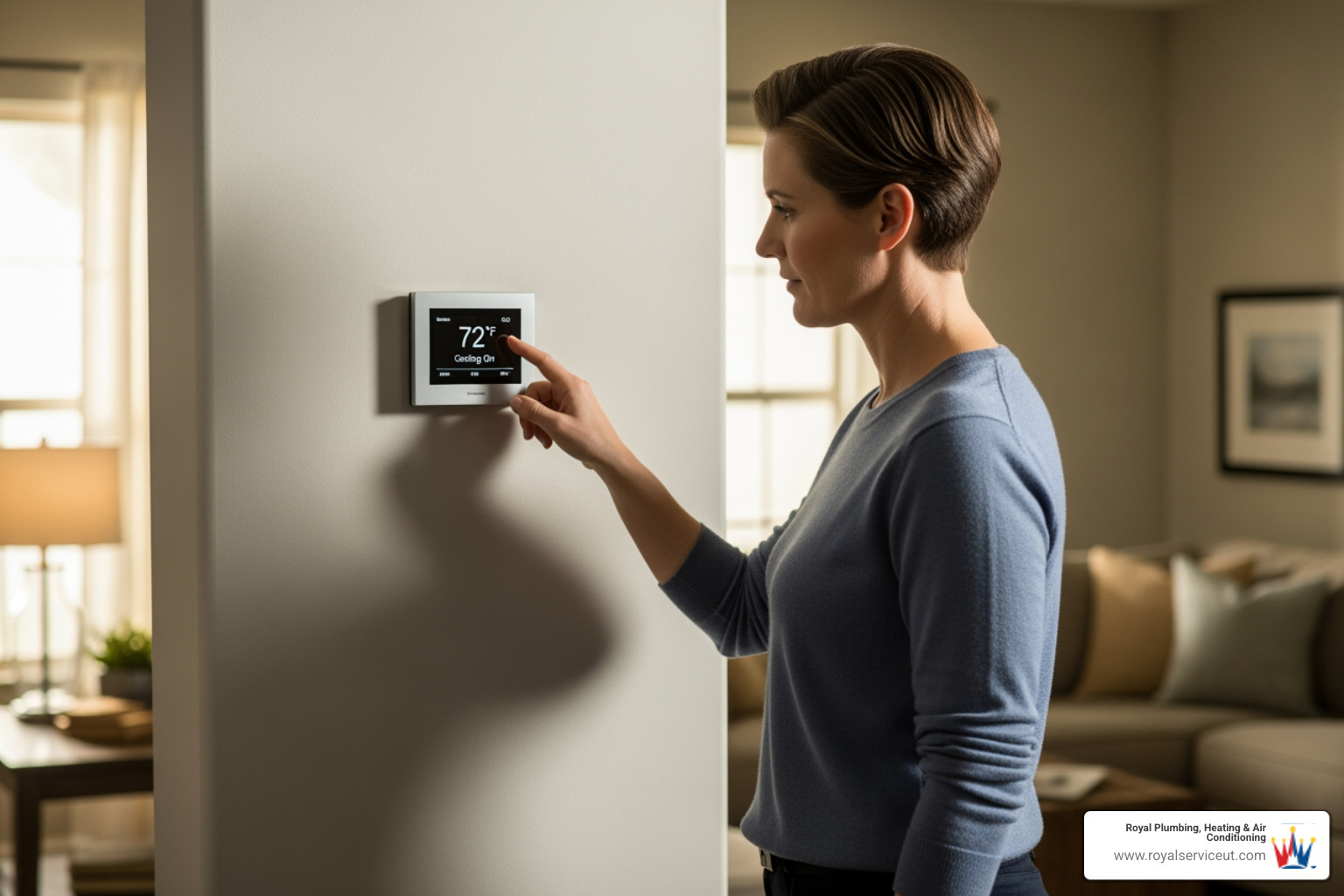
Think of your thermostat as mission control for your heating system. When something goes wrong with heating blowing cold air in clinton, ut, this little device on your wall is often the culprit—and usually for reasons that are easy to fix.
Start by checking the batteries. Yes, it sounds almost too simple, but low or dead batteries can cause all sorts of communication problems between your thermostat and furnace. Pop in fresh batteries and see if that solves your problem.
Next, take a close look at your settings. Make sure your thermostat is actually set to "HEAT" mode, not "COOL" or "OFF." It happens more often than you'd think, especially if you have kids who like pushing buttons or if someone bumped it by accident.
Here's the setting that trips up almost everyone: the fan mode. If your fan is set to "ON," your blower will run constantly, even when the furnace isn't actively heating. That means it's just pushing regular room-temperature air through your vents, which feels cold compared to what you're expecting. Switch it to "AUTO" instead. This tells the fan to only run when the furnace is actually producing heat.
Smart thermostats add another layer of convenience to your life, but they can also experience their own quirks. If you have a smart thermostat and suspect it's acting up, try resetting it according to the manufacturer's instructions. Sometimes these devices just need a fresh start, much like your smartphone occasionally needs a reboot.
Here's something that surprises most homeowners: a dirty air filter is one of the top reasons your furnace might be heating blowing cold air in clinton, ut. It seems like such a small thing, but that little filter plays a huge role in your system's performance.
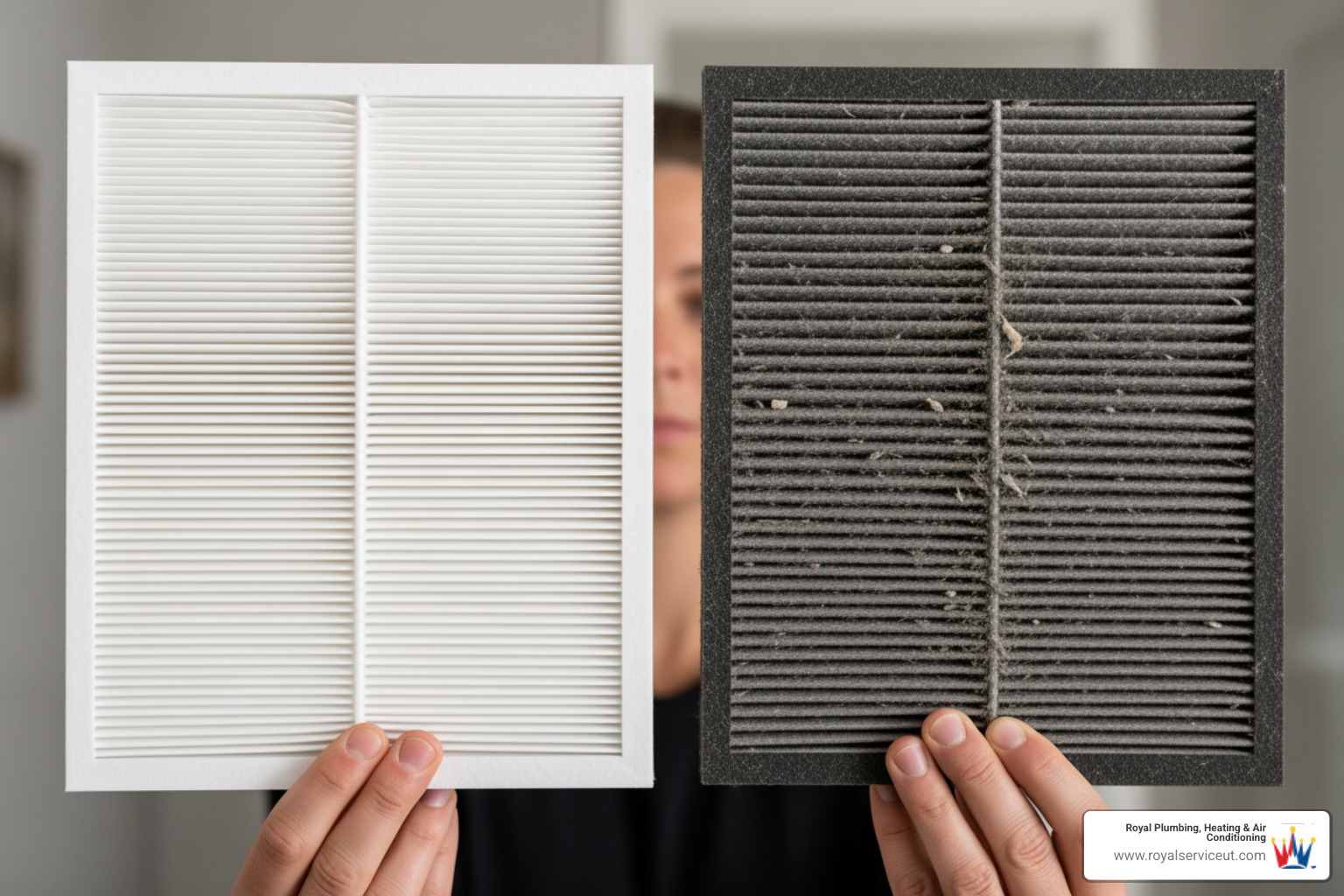
When your filter gets clogged with dust, pet hair, and other debris, it restricts airflow to your furnace. Imagine trying to breathe through a thick scarf wrapped around your face—that's essentially what your furnace experiences with a dirty filter.
Without proper airflow, your furnace can overheat. When this happens, a safety device called the high-limit switch kicks in to protect your system from damage. It shuts off the burners, but here's the catch: the blower fan often keeps running. So you end up with a fan pushing unheated air through your vents, leaving you wondering why your furnace is betraying you.
The good news? Checking and changing your filter is one of the easiest maintenance tasks you can do. Your filter is typically located in the return air duct or inside the furnace unit itself. Pull it out and hold it up to the light. If you can't see light through it easily, or if it looks grey and caked with dust, it's time for a replacement.
During Clinton's heating season, we recommend checking your filter every month. Most homes should change filters every one to three months, but if you have pets or family members with allergies, you might need to change them more frequently. It's a small task that takes just a couple of minutes but can prevent a whole lot of discomfort.
If you have an older gas furnace, a pilot light that's gone out is a common reason for heating blowing cold air in clinton, ut. The pilot light is that small, steady flame that ignites your main burners. No pilot light means no heat, even though your blower might still be running.
The good news is that relighting a pilot light is usually something you can do yourself. Look for the instructions printed on a label on your furnace's access panel. They'll walk you through the process step by step.
Before you attempt to relight it, follow the safety precautions carefully. Turn off the gas supply and wait at least five minutes before trying to relight. This allows any accumulated gas to dissipate. Gas is nothing to mess around with, so take your time and follow the instructions exactly.
Newer furnaces use electronic ignition systems instead of pilot lights. These systems are more efficient and reliable, but when they do fail, they typically require professional diagnosis and repair. You'll know you have an electronic ignition if you don't see a continuous pilot flame.
Here's an important warning: if you relight your pilot light and it goes out again, stop trying. A pilot light that won't stay lit indicates a bigger problem—possibly with the thermocouple, gas supply, or ventilation. This is when it's time to call in the professionals. Repeated attempts to relight could be dangerous and won't solve the underlying issue.
Sometimes, the solution to heating blowing cold air in clinton, ut isn't as simple as changing a filter or adjusting your thermostat. When we're called out to homes in Clinton, we often find that the problem lies deeper within the furnace itself—issues that require professional tools, training, and experience to diagnose and fix safely.
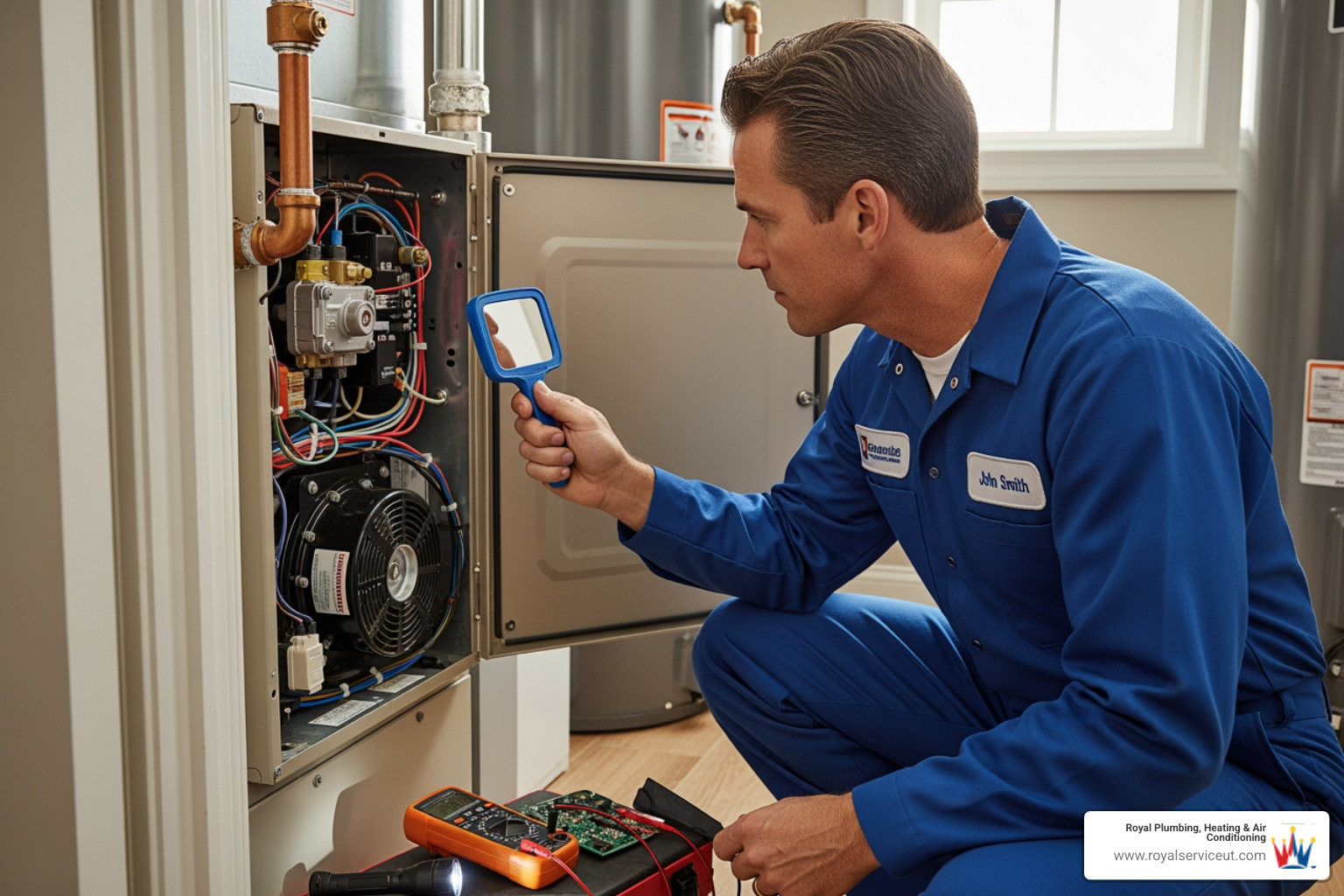
Understanding what might be happening inside your furnace can help you recognize when it's time to stop troubleshooting and pick up the phone. These are the most common mechanical and structural issues we encounter that leave Clinton families shivering.
When your furnace fires up but no heat comes out, there's a good chance the burners aren't igniting properly. This is one of the most frequent causes of heating blowing cold air in clinton, ut, and it can happen for several reasons.
A gas supply issue might be the culprit—perhaps a valve isn't fully open, or there's an interruption in the gas line feeding your furnace. Without adequate fuel, the burners simply can't create the flame needed to heat your home.
Over time, burners can become clogged with dirt, dust, and debris. When this happens, the flame burns unevenly or not at all. You might notice a yellow or orange flame instead of the crisp blue flame that indicates proper combustion. This isn't just an efficiency problem—it's a safety concern.
The flame sensor is a small but critical safety device that confirms the burners are actually lit before allowing gas to continue flowing. If this sensor gets dirty (which happens frequently), it can't "see" the flame and will shut off the gas supply as a precaution. Your furnace might start up, run for a few seconds, and then shut down, leaving you with nothing but cold air.
Delayed ignition is another issue we see regularly. You'll hear the furnace click on, but there's a pause—sometimes several seconds—before the burners actually ignite. This delay can allow gas to build up briefly before igniting with a small "boom." If you're experiencing this, it needs immediate professional attention.
Anything involving gas combustion isn't something to tinker with on your own. These issues require the proper diagnostic equipment and expertise to resolve safely.
Your furnace has built-in safety mechanisms designed to protect both the equipment and your home. The high-limit switch is one of these crucial safeguards, and when it activates, it can leave you wondering why you're getting heating blowing cold air in clinton, ut.
When your furnace overheats, this switch kicks in and shuts down the burners. But here's the confusing part—the blower fan usually keeps running to cool down the system. So you'll hear the furnace running and feel air coming from the vents, but that air is cold because the burners have been turned off.
We've already talked about how a dirty filter restricts airflow and causes overheating, but there are other culprits too. Blower motor problems can prevent enough air from moving across the heat exchanger. If the motor is failing, running at the wrong speed, or if the blower wheel is dirty, your furnace can't circulate air properly.
Sometimes the issue is restricted airflow from other sources. Are furniture or curtains blocking your return air vents? Have you closed off too many supply registers in unused rooms? Is your ductwork undersized for your furnace? All of these scenarios can starve your furnace of the air it needs to operate safely.
When your furnace repeatedly overheats and shuts down, it starts short cycling—turning on and off in rapid succession. This pattern is hard on your equipment, wastes energy, and leaves your home uncomfortably cold. Short cycling always indicates a problem that needs professional diagnosis.
Here's something most homeowners don't think about: the heated air your furnace produces has to travel through ductwork to reach your rooms. If those ducts are leaking, you're literally heating your attic, crawl space, or the space between your walls instead of your living areas. The US Department of Energy (DOE) advises that leaking heated air into unheated spaces, like an attic or basement, can add hundreds of dollars a year to energy bills.
In Clinton homes, ductwork often runs through unconditioned spaces where temperatures can drop well below freezing in winter. When warm air escapes through gaps, holes, or disconnected sections in these cold areas, it never makes it to your bedrooms and living spaces. Instead, you get uneven heating—some rooms feel toasty while others remain stubbornly cold.
Your energy bills climb because your furnace has to run longer and work harder to compensate for all that lost heat. Meanwhile, the air that does make it through the damaged ductwork has often cooled down significantly by the time it reaches your vents.
You might be able to spot some ductwork problems yourself if you can access your attic or basement. Look for obvious gaps, disconnected sections, or damaged insulation around the ducts. But many leaks hide inside walls, above ceilings, or in other inaccessible spots. Professional duct inspection often involves specialized cameras and pressure testing to find problems you can't see.
When ductwork is the issue, simply fixing your furnace won't solve the problem. The entire distribution system needs attention to restore proper heating throughout your Clinton home.
While DIY troubleshooting can resolve some minor issues, there comes a point when professional intervention is necessary. Attempting complex repairs yourself can lead to further damage, void warranties, or even create safety hazards. When your furnace is heating blowing cold air in clinton, ut despite your best efforts, it's time to call in the experts.
Our NATE-certified technicians are equipped with specialized tools and extensive knowledge to accurately diagnose and safely repair your heating system. We understand the intricacies of different furnace models and can ensure that any repairs are performed correctly, restoring your home's warmth and comfort.
How do you know when it's time to pick up the phone? Here are some clear indicators that professional help is needed for heating blowing cold air in clinton, ut:
Don't wait until the cold becomes unbearable. Early intervention can prevent minor issues from escalating into major, more costly breakdowns.
Your furnace should operate relatively quietly. If you start hearing unusual sounds or smelling strange odors, it's a definite sign to call us right away.
These sounds and smells aren't just annoying; they often point to serious mechanical or safety issues that require immediate professional diagnosis and repair.
When your home in Clinton is experiencing heating blowing cold air in clinton, ut, choosing a local HVAC professional like us offers distinct advantages:
We specialize in fast, dependable heating repair in Clinton. Our team offers same-day service, clear pricing, and friendly technicians who treat your home like their own.
When your furnace is heating blowing cold air in clinton, ut, you're standing at a crossroads. Should you repair the system you have, or is it time to invest in a new one? This decision affects not just your immediate comfort, but also your wallet and peace of mind for years to come.
The average furnace lives about 15 to 20 years with proper care. As your system ages, it naturally becomes less efficient and more temperamental. Think of it like an older car—at some point, you're pouring more money into repairs than the vehicle is worth. We've helped countless Clinton homeowners work through this decision, and we can help you figure out what makes sense for your situation.
Sometimes, a repair is absolutely the right call. If your furnace is younger than 10-15 years old, a repair can buy you several more years of reliable service. When the problem is something relatively straightforward—a faulty flame sensor, a worn-out blower motor, or even just a clogged filter that caused overheating—fixing it makes good financial sense.
We typically recommend repair when it's an isolated incident rather than the latest in a series of breakdowns. If this is the first time your system has given you trouble in years, a repair will likely get you back on track without breaking the bank.
The key question is whether the repair cost is reasonable compared to the value and expected remaining life of your system. A $300 repair on a 7-year-old furnace? That's usually a no-brainer. That same repair on a 19-year-old system that's been acting up repeatedly? That's when we need to have a different conversation.
There comes a point when repairing a furnace that's heating blowing cold air in clinton, ut is like trying to keep a sinking ship afloat with a bucket. You might stay above water for a while, but you're fighting a losing battle.
| Signs for Repair | Signs for Replacement |
|---|---|
| Minor component failure | Age over 15-20 years |
| System is under 10-15 years old | Frequent breakdowns and costly repairs |
| Isolated incident, not a recurring problem | Rising energy bills despite consistent usage |
| Repair cost is low relative to system value | Poor performance (uneven heating, cold spots) |
| No major safety concerns | Major component failure (e.g., cracked heat exchanger) |
| Adequate energy efficiency (AFUE) | AFUE rating below 80% (older units) |
| Loud, unusual noises or persistent strange smells |
Age is one of the biggest factors. If your furnace has celebrated its 15th birthday and is now acting up, replacement often makes more sense than repair. These older systems are simply less efficient than modern models, which means you're paying more every month to heat your home.
Frequent breakdowns are another red flag. If you're calling for repairs multiple times a season, those costs add up quickly. More importantly, you're dealing with the stress and discomfort of repeated failures during Clinton's coldest months.
Rising energy bills tell their own story. When your heating costs keep climbing even though you haven't changed your thermostat habits, your furnace is working harder and less efficiently than it should. Modern furnaces can achieve AFUE (Annual Fuel Utilization Efficiency) ratings of 90% or higher, meaning 90 cents of every dollar you spend goes directly to heating your home. Older systems might limp along at 60-70% efficiency, wasting 30-40 cents of every heating dollar.
Major component failures like a cracked heat exchanger are particularly concerning. Not only are these repairs expensive, but they can also pose safety risks. In many cases, the cost of replacing major components approaches the cost of a new system—one that will be more efficient, more reliable, and come with a warranty.
We understand this isn't an easy decision. That's why we take time to explain your options clearly, show you what we're seeing, and help you understand the long-term implications of each choice. Whether you decide to repair or replace, we'll make sure you're comfortable with the path forward.
Nobody should have to shiver in their own home during a Clinton winter. If you've found yourself dealing with heating blowing cold air in clinton, ut, you now have the tools to understand what might be going wrong and how to take action.
We've walked through the simple fixes first—checking your thermostat settings, replacing that dirty air filter, and making sure your pilot light is burning. These basic troubleshooting steps can often get your warmth back quickly without needing a service call. But we've also covered the more complex issues that sometimes hide behind cold air problems, from faulty flame sensors to leaky ductwork that's wasting your heated air before it ever reaches your living room.
The key is knowing when to tackle something yourself and when to call for backup. If you've checked the basics and you're still bundled up in blankets, or if you're hearing strange noises or smelling something concerning, that's your furnace telling you it needs professional attention. Don't ignore these warning signs—they rarely get better on their own, and waiting often leads to bigger, more expensive problems down the road.
Regular maintenance is your best defense against unexpected breakdowns. Just like you wouldn't skip oil changes for your car, your furnace needs annual tune-ups to keep running smoothly through those long Utah winters. A little preventive care goes a long way toward avoiding those middle-of-the-night emergencies when temperatures drop.
Your comfort matters, and your family deserves a home that stays warm when winter hits. Whether your system needs a quick repair or it's time to consider a replacement, we're here to help you make the right decision for your home and budget.
At Royal Plumbing, Heating & Air, we treat every home like it's our own. Our NATE-certified technicians bring years of experience and a commitment to getting things done right the first time.
Ready to restore warmth to your Clinton home? Schedule HVAC service in the Roy, UT area and let us bring the comfort back where it belongs.
Find answers to frequently asked questions about our services.
By reading this blog post, you will gain valuable insights and knowledge that can help you in your daily life.
The purpose of this blog post is to inform and educate readers about a specific topic, providing them with useful information and tips.
The target audience for this blog post includes individuals who are interested in learning more about the topic and seeking practical advice.
You can apply the knowledge and tips shared in this blog post to your own life by implementing them in your daily routine.
The benefits of reading this blog post include gaining new perspectives, acquiring practical skills, and enhancing your overall knowledge on the topic.
Absolutely! Feel free to share this blog post with your friends, family, or anyone who might find it helpful or interesting.
Yes, the information provided in this blog post is reliable and based on credible sources. We strive to ensure the accuracy and quality of the content we share.
The benefits of reading this blog post include gaining new perspectives, acquiring practical skills, and enhancing your overall knowledge on the topic.
If you have more questions related to the blog post topic, please don't hesitate to contact our team. We're here to help!
We value your feedback! If you have any suggestions, comments, or feedback regarding this blog post, please let us know. Your input is important to us.
Trust our team of dedicated professionals for all your HVAC and plumbing needs.
