When winter temperatures in Layton drop into the low 20s and your furnace suddenly fails, you're facing a heating repair emergency in Layton, UT that needs immediate attention. Without heat, your home quickly becomes uncomfortable and unsafe—frozen pipes can burst within hours, carbon monoxide risks increase with malfunctioning systems, and your family's health and safety are at stake. Understanding when you have a true emergency and what steps to take can protect your home and loved ones during Utah's coldest months.
If you're experiencing a heating emergency right now:
- No heat at all - Check thermostat, power switch, and circuit breaker, then call for emergency repair
- Gas smell or carbon monoxide alarm - Evacuate immediately, call 911, do not restart your system
- Strange noises or burning smells - Turn off your furnace and contact a professional
- Yellow pilot light (instead of blue) - This indicates incomplete combustion—shut down and call for service
- System short-cycling repeatedly - This can damage components and leave you without heat
For comprehensive information on heating system care and maintenance, explore our complete heating services guide, and when you need immediate help, our emergency repair team is ready to restore your comfort—contact Royal Plumbing, Heating & Air now.
Layton's average winter temperatures ranging from the low 20s to low 40s Fahrenheit mean your heating system isn't optional—it's essential for safety and comfort. Most furnaces last 15-20 years, and many homes in the area may have aging systems more prone to unexpected breakdowns during peak demand. When these failures happen, knowing the difference between a minor issue and a true emergency helps you respond appropriately and avoid further damage.
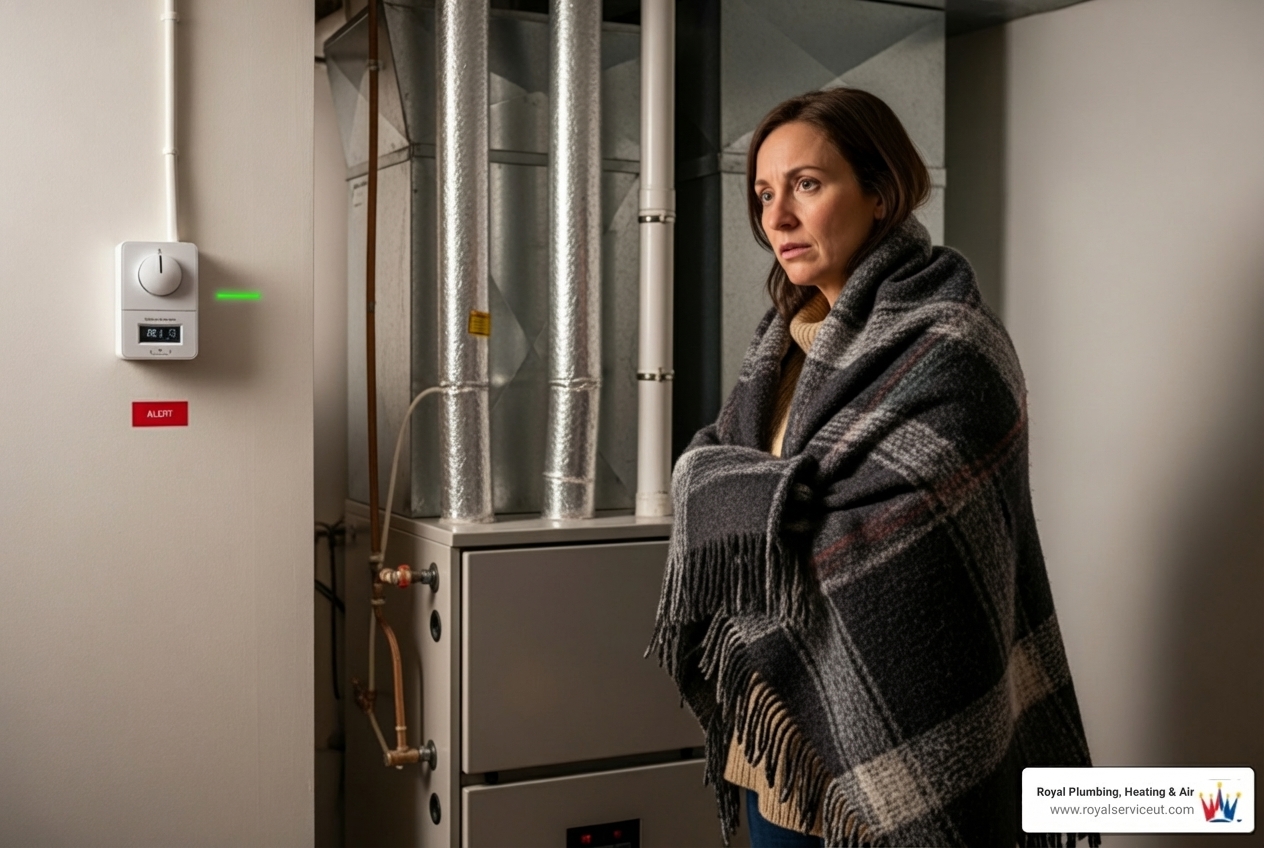
Is It a True Heating Emergency? Key Signs to Watch For
Layton's climate, with its chilly winters, makes a reliable heating system a non-negotiable necessity for every home. Our heating systems are crucial not just for comfort, but for protecting our homes from the damaging effects of freezing temperatures. The average lifespan of a furnace is between 15-20 years, which means many homes in our community may have older systems that are more susceptible to unexpected breakdowns. We know that system reliability is paramount, especially when the mercury drops. When your heating system starts acting up, recognize the difference between a minor hiccup and a full-blown heating repair emergency in Layton, UT. Ignoring early warning signs can lead to increased energy bills due to inefficiency, and ultimately, a complete system failure when you need it most.
Signs You Need an Emergency Heating Repair in Layton, UT
When your heating system shows certain symptoms, it's a clear signal that you need immediate professional attention. These aren't issues you can put off until morning; they require prompt action to ensure your family's safety and comfort.
Here are the critical signs that indicate an immediate need for emergency heating repair:
- No Heat at All: This is perhaps the most obvious and critical sign, especially during Layton's cold snaps. If your furnace isn't producing any heat, or the air coming from the vents is cold, your home's temperature can drop rapidly, leading to discomfort and potentially dangerous conditions like frozen pipes.
- Strange, Loud Noises: Furnaces typically operate with a consistent hum. If you start hearing unusual sounds like grinding, squealing, banging, or clanking, it often indicates a mechanical failure. A loud banging noise, for example, could be caused by delayed ignition or issues with the blower motor. These noises suggest components are failing and could lead to a complete breakdown.
- Unusual or Pungent Smells: Any strange odor emanating from your furnace is a cause for concern. A burning smell might indicate an electrical issue or excessive dust burning off. More critically, a smell of rotten eggs or sulfur is a strong indicator of a gas leak, which is extremely dangerous.
- Gas Leak Symptoms: Beyond the distinct sulfur smell, other signs of a gas leak include dizziness, nausea, fatigue, or headache among household members. If anyone experiences these symptoms and you suspect a gas leak, prioritize safety immediately.
- Carbon Monoxide Detector Alarms: Carbon monoxide (CO) is an odorless, colorless, and highly toxic gas. A malfunctioning heating system can produce CO. If your CO detector goes off, it's a life-threatening emergency. Do not ignore this alarm.
- Frequent Short-Cycling: If your furnace turns on and off frequently, running for only short periods, it's known as short-cycling. This can be caused by a clogged air filter, an improperly sized unit, or a failing component. Short-cycling is inefficient, increases wear and tear on your system, and can lead to premature breakdown.
- Pilot Light Issues: For furnaces with a pilot light, it should be a steady blue flame. If you notice a yellow or flickering pilot light, it indicates incomplete combustion, which can produce carbon monoxide. This requires immediate professional assessment.
The Risks of Delaying Emergency Heating Repair in Layton, UT
Delaying an emergency heating repair, particularly in our cold Layton winters, is a gamble with significant consequences. What might seem like a minor inconvenience can quickly escalate into a costly and dangerous situation.
- Frozen and Burst Pipes: Without adequate heat, especially when temperatures are consistently below freezing, the water in your pipes can freeze and expand. This can cause pipes to burst, leading to extensive and expensive water damage throughout your home. Repairing burst pipes and the resulting damage is far more costly than addressing a furnace issue promptly.
- Extensive System Damage: Ignoring minor heating issues can lead to more extensive damage, potentially doubling repair costs. A small problem, if left unaddressed, can put undue stress on other components, causing a domino effect of failures. For example, a failing blower motor can cause your heat exchanger to overheat and crack, a much more severe and expensive repair.
- Serious Safety Hazards: A malfunctioning heating system can pose severe safety risks. Electrical issues can lead to fires, while a cracked heat exchanger or improper combustion can result in carbon monoxide leaks. Carbon monoxide poisoning, in particular, is a silent killer, as the gas is undetectable without a specialized alarm.
- Carbon Monoxide Poisoning: As mentioned, a faulty furnace, especially older or poorly maintained units, can produce carbon monoxide. This invisible, odorless gas can cause serious illness or even death. Delaying repair when CO is suspected puts everyone in your home at grave danger.
- Fire Risk: Electrical malfunctions, frayed wiring, or overheating components within your furnace can ignite surrounding materials, leading to a house fire. Any burning smells or sparks from your unit should be treated as an immediate fire hazard.
Ignoring these critical signs and delaying a necessary heating repair emergency in Layton, UT can turn a bad situation into a catastrophic one. Our priority is your safety and comfort, and we urge you to act quickly when faced with these emergencies.
When your heating system fails, especially during a cold Layton winter, panic can easily set in. But by taking a few immediate, calm steps, you can ensure your safety and often provide valuable information to our technicians. Your first actions are crucial for safety and effective troubleshooting.
If You Smell Gas or Your CO Detector Goes Off
This is the most critical scenario and requires immediate, decisive action. If you suspect a gas leak or your carbon monoxide detector sounds, your family's safety is paramount.
- Evacuate Immediately: Get everyone, including pets, out of the house right away. Do not hesitate.
- Call 911: Once you are safely outside and away from the house, call 911 or your local emergency services. Report the suspected gas leak or CO alarm.
- Contact Your Gas Company: After calling 911, notify your gas utility company. They can shut off the gas supply remotely or dispatch someone quickly.
- Do Not Use Electronics: Avoid using light switches, cell phones, or any electrical appliances inside or near your home, as a spark could ignite gas. Do not open windows or doors to "clear" the air, as this can also create drafts that spread gas.
- Do Not Restart Your Furnace: Under no circumstances should you attempt to restart your furnace or re-enter your home until emergency services have deemed it safe.
Basic Troubleshooting Steps (If No Gas Smell)
If there's no smell of gas and your CO detector is silent, you can attempt some basic troubleshooting steps before calling for a heating repair emergency in Layton, UT. These steps often resolve common issues or help us diagnose the problem more quickly.
- Check Your Thermostat Settings:
- Ensure your thermostat is set to "Heat" mode.
- Verify that the temperature setting is several degrees above the current room temperature.
- If it's a digital thermostat, check the batteries. Dim or blank displays often mean dead batteries. Replace them if necessary.
- Inspect Your Air Filter: A clogged air filter is one of the most common reasons a furnace malfunctions or short-cycles. A dirty filter restricts airflow, causing the system to overheat and shut down as a safety measure.
- Locate your furnace filter (usually in the return air duct or at the furnace itself).
- Pull it out and examine it. If it's grey with dust and debris, it's time for a replacement.
- Replace 1-inch filters monthly, and 4-inch filters every 6-9 months, or more frequently if you have pets or allergies.
- Check the Furnace Power Switch: Most furnaces have a power switch located directly on or near the unit, often resembling a light switch. Make sure it's in the "ON" position. Sometimes these get accidentally flipped off.
- Reset the Circuit Breaker: Go to your home's electrical panel. Look for a tripped breaker (it will usually be in the middle position, between ON and OFF). Flip it completely OFF, then back to ON. If it trips again immediately, do not keep resetting it; this indicates a more serious electrical issue that requires professional attention.
- For Hydronic Systems (Boilers/Radiators): If you have a boiler and your radiators are cold at the top, you might have air trapped in the system. You can try bleeding the radiators to release the trapped air before calling for service.
After performing these steps, if your heating system still isn't working, it's time to call in the professionals.
What to Expect from a Heating Repair Emergency in Layton, UT
When you're facing a heating repair emergency in Layton, UT, you need quick, reliable service. We understand that a furnace breakdown isn't a 9-to-5 problem; it can happen at any time, day or night. That's why we offer 24/7 availability for emergency services. Our goal is to provide royal comfort and peace of mind by getting your system back up and running as quickly and safely as possible.
When you call us for an emergency, you can expect a professional, courteous response. We'll gather initial information to understand the situation, then dispatch a skilled technician to your Layton home. Upon arrival, our technician will conduct a thorough professional diagnosis to pinpoint the problem. They will explain the issue clearly, discuss your options, and proceed with the necessary repair process, ensuring your system is fully tested before they leave.
To ensure the fastest and most efficient service during a heating repair emergency in Layton, UT, having some key information ready when you call can be incredibly helpful. This allows our dispatchers and technicians to prepare and potentially bring the right parts on the first visit.
- System Type: Is it a furnace, boiler, or heat pump? Knowing this helps us understand the general system our technician will be working on.
- Make and Model: If you can locate the manufacturer's label on your unit (usually on the side or inside the access panel), noting the brand, model number, and serial number can be very useful.
- Age of Unit: The average lifespan of a furnace is 15-20 years. Knowing your unit's age helps us understand its potential vulnerabilities and whether repair or replacement might be a more cost-effective long-term solution.
- Description of the Problem: Provide as much detail as possible. When did the issue start? What exactly is happening (e.g., no heat, strange noise, specific smell)? What troubleshooting steps have you already taken?
- Your Address and Availability: Confirm your full address in Layton, UT, and let us know your availability for our technician to arrive.
The Professional Repair Process
When our technician arrives at your home for a heating repair emergency in Layton, UT, they follow a systematic process to ensure a complete and lasting solution.
- Initial Assessment and Safety Check: The technician will start by assessing the situation and performing initial safety checks, especially if there were concerns about gas or CO. Safety is always our top priority.
- System Diagnostics: Using their expertise and specialized tools, they will conduct comprehensive system-level diagnostics. This involves checking electrical connections, thermostat functionality, airflow, and overall system operation.
- Component Testing: Once the general area of the problem is identified, the technician will perform component-level testing to pinpoint the exact faulty part. This could involve checking ignition systems, control boards, blower motors, heat exchangers, or other critical components.
- Fault Identification and Explanation: After identifying the problem, our technician will clearly explain what's wrong, why it happened, and what needs to be done to fix it. We believe in transparent communication, ensuring you understand the issue.
- Repair vs. Replacement Discussion: For older units or very extensive damage, the technician will discuss the pros and cons of repairing the existing system versus replacing it with a new, more efficient one. They'll consider factors like the system's age, efficiency, safety concerns, and the potential cost of repeated repairs. Our technicians aim to provide solutions that offer long-term value and royal comfort.
- Repair and Parts Replacement: Once a course of action is agreed upon, the technician will proceed with the repair, using high-quality parts and adhering to industry best practices. We ensure our repairs are done right the first time.
- Post-Repair System Check: After the repair is complete, the technician will thoroughly test the entire heating system to ensure it's operating correctly, safely, and efficiently. They will verify that the heat output is correct, there are no leaks, and all safety features are functioning. This final step confirms that your heating repair emergency in Layton, UT has been fully resolved.
How to Prevent Future Heating Emergencies
While we're always here for your heating repair emergency in Layton, UT, our ultimate goal is to help you avoid them altogether. Proactive care and regular maintenance are key to ensuring system longevity, optimizing energy efficiency, and preventing those unwelcome breakdowns during the coldest months. Think of it like taking care of your car—regular oil changes prevent major engine trouble down the road.
The Importance of Regular Maintenance
Regular professional maintenance is the single most effective way to prevent future heating emergencies and extend the life of your heating system.
- Annual Tune-Ups: We recommend scheduling an annual furnace tune-up, ideally in the fall before the heating season begins. During these visits, our experienced technicians perform comprehensive checks, clean components, lubricate moving parts, and identify potential issues before they become emergencies. This proactive approach helps your system run efficiently and reliably.
- Filter Changes: While you can change filters yourself, a professional tune-up includes a thorough inspection of your filter system and ensures optimal airflow.
- Ductwork Inspection: Our technicians can inspect your ductwork for leaks or blockages that might be hindering efficiency and causing your system to work harder than necessary. Sealing leaks can significantly improve performance.
- Safety Checks: A professional tune-up includes critical safety checks for carbon monoxide leaks, gas pressure, electrical connections, and proper ventilation. This is vital for protecting your home and family.
- Warranty Requirements: Many furnace manufacturers require annual professional maintenance to keep your warranty valid. Skipping these tune-ups could void your warranty, leaving you responsible for costly repairs that would otherwise be covered. Regular maintenance is an investment that pays dividends in comfort, safety, and savings.
Simple Homeowner Maintenance Tips
Beyond professional tune-ups, there are several simple things you, as a homeowner, can do to contribute to your heating system's health and prevent a heating repair emergency in Layton, UT:
- Regularly Replace Filters: As discussed, a clean filter is crucial for efficient operation. Make it a habit to check your filter monthly and replace it every 1-3 months, or more often if you have pets or allergies.
- Keep Vents Clear: Ensure that all heating vents in your home are unobstructed by furniture, rugs, or drapes. Blocked vents restrict airflow, making your furnace work harder and reducing efficiency.
- Test CO Detectors: Test your carbon monoxide detectors monthly to ensure they are functioning correctly. Replace batteries annually and replace the units themselves every 5-7 years, as recommended by the manufacturer.
- Visually Inspect the Unit: Periodically take a look at your furnace. Are there any visible signs of rust, corrosion, or frayed wires? Do you notice any puddles or leaks around the unit? Catching these issues early can prevent bigger problems.
- Listen for New Sounds: Pay attention to the sounds your furnace makes. If you start hearing new or unusual noises that weren't there before, it's a good idea to call us for an inspection. Early detection can prevent a minor issue from becoming a major heating repair emergency in Layton, UT.
Frequently Asked Questions about Heating Systems
We often hear similar questions from homeowners in Layton about their heating systems. Here are answers to some of the most common inquiries, helping you understand your system better and avoid emergencies.
How often should I change my furnace filter?
The frequency of furnace filter changes depends on several factors:
- Filter Type: Standard 1-inch disposable filters should generally be changed every 1-3 months. Thicker 4-inch or 5-inch filters can last 6-12 months. Always check the manufacturer's recommendations.
- Pet Ownership: If you have pets that shed, their dander and hair can quickly clog filters. We recommend checking and possibly changing filters monthly.
- Home Air Quality: Homes with more dust, construction nearby, or residents with allergies or respiratory issues may benefit from more frequent changes to maintain better indoor air quality and system efficiency.
A good rule of thumb is to check your filter monthly. If it looks grey and dirty, it's time to replace it. A clean filter ensures optimal airflow, reduces strain on your furnace, and helps prevent a heating repair emergency in Layton, UT.
Why is my furnace making a loud banging noise?
A loud banging noise from your furnace can be startling and indicates a problem. Here are a few common reasons:
- Ductwork Expansion and Contraction: This is often the most benign cause. As your furnace heats up, the metal in your ductwork expands, and as it cools, it contracts. This can create popping or banging sounds. While usually harmless, if it's excessively loud or frequent, it could indicate improperly sized or installed ductwork.
- Delayed Ignition: If gas builds up in the combustion chamber before igniting, it can cause a small explosion when it finally lights, resulting in a loud bang. This is a serious safety concern and indicates a problem with your ignition system (e.g., a faulty igniter or dirty burners).
- Blower Motor Issues: Sometimes, a banging or clanking noise can come from the blower motor if it has a loose component, a failing bearing, or if the blower wheel is unbalanced.
If you hear persistent or very loud banging, especially if accompanied by a gas smell or no heat, it's a sign you need professional attention. A delayed ignition is a safety hazard that requires immediate repair.
Can I close vents in rooms I don't use?
Many homeowners believe that closing off vents in unused rooms saves energy, but this is a common misconception that can actually harm your heating system and reduce efficiency.
- Air Pressure Imbalance: Your HVAC system is designed to operate with a specific amount of airflow. Closing vents creates an air pressure imbalance within your ductwork. This forces your furnace to work harder to push air through restricted pathways, leading to increased wear and tear on the blower motor and other components.
- Reduced Efficiency: The increased strain on your system means it consumes more energy, potentially leading to higher utility bills rather than savings. The heated air may also find its way back to the furnace through return ducts, causing the system to short-cycle and reduce overall efficiency.
- Potential System Damage: In severe cases, closing too many vents can lead to overheating of the furnace's heat exchanger, which can cause it to crack. A cracked heat exchanger is extremely dangerous as it can leak carbon monoxide into your home, turning a simple efficiency concern into a serious heating repair emergency in Layton, UT.
Instead of closing vents, consider installing a zoning system, which allows you to control temperatures in different areas of your home more effectively and safely. For general energy savings, focus on proper insulation, sealing air leaks, and regular maintenance.
Your Partner for Reliable Heating in Layton
When a heating repair emergency in Layton, UT strikes, you need a trusted partner who understands the unique challenges of our local climate and is committed to your comfort and safety. We know that in the heart of winter, a functioning heating system isn't a luxury; it's a necessity. That's why we emphasize the importance of prompt action and reliable service.
Our mission is to restore your home comfort swiftly and efficiently, ensuring your family's safety from the risks associated with a malfunctioning furnace. We pride ourselves on providing affordable, high-quality, and reliable service, delivering "royal comfort" through our team of experienced and dedicated technicians. We are available 24/7 for emergencies, because we understand that heating problems don't adhere to a convenient schedule.
Whether you're facing a sudden breakdown, noticing concerning signs, or simply looking to prevent future emergencies through proactive maintenance, we are here to help. Don't let a heating emergency compromise your family's well-being or your home's integrity.
Get fast, reliable heating repair in Layton, UT today and experience the peace of mind that comes with professional, expert service.